Consistent pour-over coffee
How a coffee shop serves it without training baristas
Most people opening a coffee shop or café want pour-over coffee on the menu. Specialty coffee sells at a higher price, it lets you talk about origin and processing, and a pour-over kettle and dripper on the counter look professional. Anyone who has run a coffee shop also knows the trouble with pour-over coffee: how good the cup is depends on the hands of the person behind the counter. Experienced baristas pour steadily, while new staff need a long time before they are ready to serve. And when the shop gets busy, the same coffee brewed by the same person tastes different in the morning and in the afternoon.
This article explains why pour-over (hand-drip) coffee is hard to keep consistent, and how to hand the part that depends on technique to tools and coffee machines, the way an automatic pour-over coffee maker does, so that every cup of pour-over coffee is the same without first turning every member of staff into a barista.
Key points
- When pour-over coffee varies from cup to cup, the cause is usually the pour: how gently and evenly the water falls, its temperature and its volume all depend on the person.
- Hand the pour to a tool or a machine and staff only weigh, grind, place the dripper and press a button. They do not need months of training in pouring technique first.
- There are two ways to do it: a pour-over shower head, or a commercial espresso machine used as a pour-over coffee machine, pouring automatically in its pour-over mode.
1. Why pour-over coffee is hard to keep consistent
From the moment hot water touches the coffee to the last drop, several things change at once in a cup of pour-over coffee:
| Variable | What decides it | When it drifts |
|---|---|---|
| Water temperature | How long the water has been off the heat, and whether anyone measured it | The same beans taste different from cup to cup |
| Water volume | Watching the scale and stopping at the right moment | One cup is strong, the next is weak |
| Evenness of the flow | Pouring technique: the width of the stream, the height, the circling | Parts of the coffee bed are over-extracted and parts are under-extracted |
| Rhythm of the pour | Experience, and how busy the counter is | Brew time runs long or short |
| Dose and grind | The scale and the grinder setting | The easiest one to fix |
A scale and a grinder take care of the last item. The first four all depend on a person. The hardest is the flow: it has to be steady, gentle and even across the coffee bed. There are plenty of guides to pouring technique, but understanding one is not the same as doing it, and doing it takes a lot of practice. Temperature and volume look simple, but at peak hours, with a pour-over kettle in one hand and the next order waiting, being slightly off is normal.
So when pour-over coffee varies, it is usually not the beans and not a lack of care. The method itself puts too many variables in one person's hands.
2. Barista training costs more than it seems
The obvious way to make pour-over coffee consistent is to train people. It works, but the cost of barista training is often underestimated:
- Practice takes time and beans. Pouring technique is a feel that can only be learned kettle by kettle. A barista training course teaches the ideas, but the feel still has to be practised. The beans and working hours used during practice are part of the cost of opening a coffee shop.
- People move on. When a barista who has finally learned it leaves, the next person starts again, and the shop's flavour has to settle once more.
- At peak hours the hands are tied. For the minutes a pour-over coffee takes, the person pouring can do nothing else. When orders pile up, customers wait. When the pour is rushed, the flow speeds up and the flavour changes.
- Opening more shops is harder still. Each new shop needs several more people who can pour, and the coffee still has to taste the same in every shop.
If pour-over coffee is what your shop is known for and you want customers to watch a barista brew, investing in people is worth it. For most coffee shops, cafés, restaurants and chain stores, where pour-over coffee is one item on the menu, the goal is simpler: every cup is good, and every cup tastes the same.
3. A different approach: hand the pour to tools and machines
Look at each step of a pour-over coffee and only the pour really needs practice. Weighing, grinding, folding the filter paper, warming the cup and serving are steps anyone can follow. They need no feel.
So making the cup consistent does not have to mean turning everyone into an expert. It can mean making the pour a fixed step: how the water falls, how hot it is and how much of it there is are handed to a tool or a machine, and people do the steps that anyone can follow.
There are machines built for exactly this, usually sold as automatic pour-over brewers, including commercial models for cafés. This article covers two ways that need no extra machine: a simple tool, and letting the commercial coffee machine the shop needs anyway pour automatically.
4. Option one: a pour-over shower head, to make the flow even first
The simplest option starts with the hardest thing to learn: the flow.
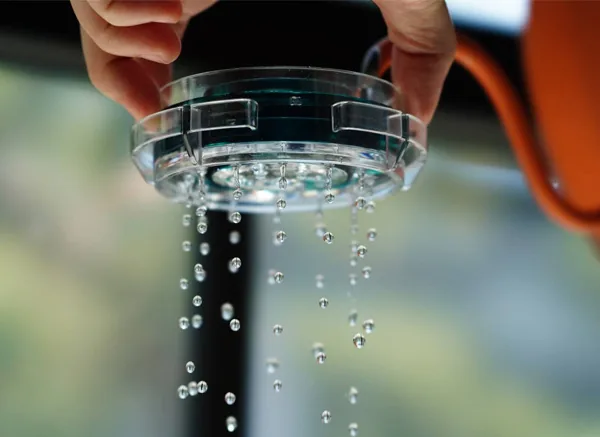
The GEE Dripping Shower is a tool for exactly this. Pour hot water into it and the water falls evenly over the coffee bed. There is no need to circle or control the stream: pour straight in and the water still falls evenly. In brief:
- Taiwan Patent No. M561480 and No. M594916.
- Made of Tritan (registered with the FDA) and BPA-free: no BPA is used in production and none is released in use.
- The components separate, so it is easy to clean.
- Size Ø92 × 28 mm, so it takes almost no room on the counter.
This option suits small coffee shops, event stalls, pour-over classes and shops that want to try pour-over coffee at very low cost. It fixes the evenness of the flow. Water temperature and volume are still yours to watch, so use it with scales and a thermometer.
5. Option two: let the commercial coffee machine pour automatically, with no separate pour-over coffee machine
The second option hands the pour itself to the coffee machine, which is what people usually mean by automatic pour-over. The difference is that there is no separate pour-over machine to buy.
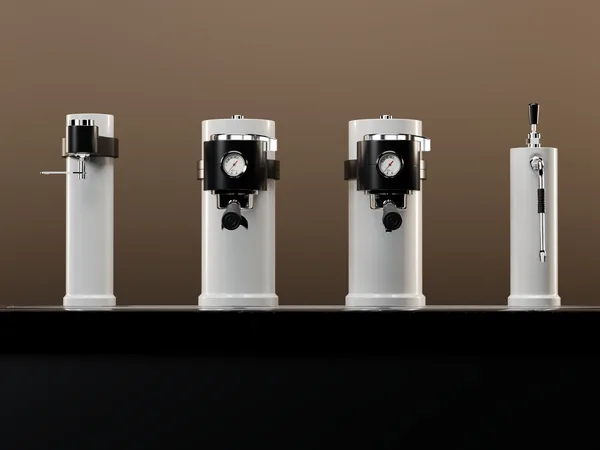
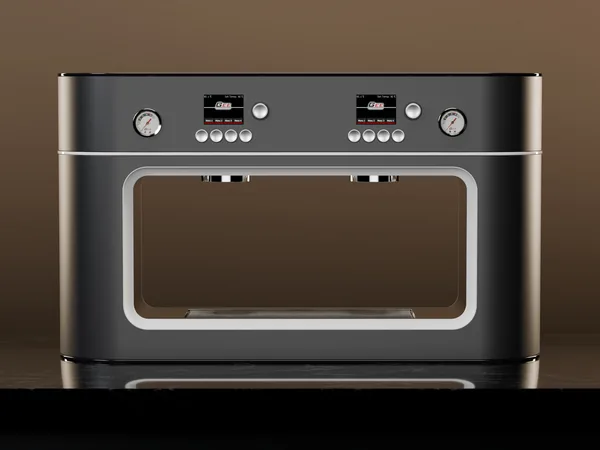
The main units of the GEE Pro Counter Top System (GCM-2109S, 2109T and 2109C) and the Pro Counter Top Twin (GCM2112) are commercial espresso machines that brew pour-over coffee as well as espresso and pressure-extracted tea. Fit the Dripping Shower accessory to the same 58mm group head, place a dripper underneath, and the machine showers water over the coffee bed so that it is wetted evenly. The GCM-2109 series works with V60, M1 and other drippers.
The parts of a pour-over coffee that depended on a person then become the machine's job:
- Water temperature is held at the set value by PID temperature control.
- The recipe is stored as machine presets: 3 extraction modes and 4 presets (4 per side on the Twin).
- The flow is spread evenly over the coffee bed by the shower.
Staff weigh, grind, place the dripper, press the button and serve the coffee. While it brews their hands are free to prepare the next cup or look after a customer.
Another benefit is that the counter needs no extra pour-over coffee machine. The same commercial coffee machine makes espresso with the coffee portafilter and pressure-extracted tea (Teapresso) with the tea portafilter. The two sides of the Twin are independent, so while one side brews pour-over coffee the other can make espresso or tea at the same time.
6. How to choose between the two
| Option | What it fixes | What still depends on people | Suits |
|---|---|---|---|
| Dripping Shower pour-over shower head | Evenness of the flow | Water temperature, volume, timing | Small coffee shops and cafés, event stalls, classes, shops that want to try first |
| Pour-over mode of the commercial coffee machine (GCM-2109 series, Twin) | Water temperature, recipe, flow | Weighing, grinding, placing the dripper | Coffee shops that need a commercial espresso machine anyway, chain stores |
Three questions help you choose:
- How much of your menu is pour-over coffee? An occasional order, or a daily mainstay?
- Does the coffee shop need an espresso machine anyway? If so, a commercial coffee machine that also brews pour-over coffee saves more space than adding a separate automatic pour-over coffee maker.
- Will you open more shops? If so, storing the recipe in the coffee machine and setting every shop to the same preset is far easier than training the baristas of every shop to pour alike.
7. Three common misunderstandings before you start
"Pour-over coffee made by a machine cannot be good coffee." Customers taste what is in the cup. The recipe is still set by someone who knows specialty coffee: choosing the beans, tasting, deciding which flavours to bring out. What the coffee machine does is make that cup the same way every time.
"With the tool there is nothing left to teach." There is still teaching to do, but of a different kind. Weighing, the grinder setting, placing the filter paper and cleaning are fixed steps that anyone can follow. What no longer has to be taught is the feel of the pour, the part of barista training that takes the most time.
"This is only for big shops." Coffee shops with few hands need it even more. When the counter is stretched, pour-over coffee is the item that ties up hands the longest. Hand over the pour and those hands are free for the next cup.
8. What the routine looks like afterwards
Once the pour is standardised, a cup of pour-over coffee follows this routine:
- Set the recipe. Choose the beans, let the person who knows coffee best work out a cup they are happy with, then save the settings in the coffee machine.
- Write it on a card. Which beans, the dose, the grinder setting, which preset, which dripper. Write it down and keep it at the counter.
- Follow the card. Weigh, grind, place the dripper, press the button. New staff can simply follow the card.
- Taste at set times. When the beans or the season change, or a customer says the coffee tastes different, test again and update the settings and the card.
- Clean every day. Wash the dripper, the shower head and the accessories the same day. The shower head's components separate for cleaning.
It is the same idea chain tea shops use to manage recipes: flavour does not rest on one person, but on stored settings and written steps.
FAQ
Does a coffee shop need an experienced barista to sell pour-over coffee?
Not necessarily. The hard part of pour-over coffee is the pour. Once the flow, the temperature and the volume are handed to a tool or a coffee machine, following fixed steps gives a consistent cup. The recipe still has to be set by someone who knows coffee.
What is an automatic pour-over coffee maker, and how does it differ from pouring by hand?
An automatic pour-over coffee maker (also sold as a pour-over coffee machine) pours in place of a person, so water temperature, volume and flow follow the settings. Pour-over coffee made by hand depends on the barista's pouring technique. The benefit of the machine is that every cup is the same, whoever is working.
Can a commercial espresso machine make pour-over coffee too?
The main units of the GEE Pro Counter Top System (GCM-2109S, 2109T and 2109C) and the Pro Counter Top Twin can. Fit the Dripping Shower accessory to the same 58mm group head and the machine pours automatically for pour-over coffee, or fit the coffee or tea portafilter and the same machine makes espresso and pressure-extracted tea.
Does a new coffee shop need a separate commercial pour-over coffee maker?
It depends on the menu. If the shop is buying an espresso machine anyway, a model that also brews pour-over coffee means no separate automatic pour-over coffee maker. If you only want to try pour-over coffee first, start with the pour-over shower head and consider a machine once it sells.
How is the Dripping Shower used?
Pour hot water into it and the water falls evenly over the coffee bed, with no pouring technique to practise. It is made of BPA-free Tritan (registered with the FDA), and it comes apart for cleaning.
Which drippers work when a coffee machine brews pour-over coffee?
With the Dripping Shower accessory fitted, the GCM-2109 series works with V60, M1 and other drippers. For another dripper, tell us the model and we will confirm.
In short
Consistent pour-over coffee does not require turning everyone into a barista. Fix the pour, the step that depends most on technique: hand the flow, the temperature and the volume to tools and coffee machines, and let people do the steps that anyone can follow. New staff who follow the card can then serve a cup of consistent quality.
GEE is the brand of RiConn Precision Technology, an espresso machine manufacturer in Taiwan, where its commercial coffee machines and coffee tools are developed and made. Not sure which option suits your coffee shop? Send us your menu, expected number of cups and photos of your counter, and the GEE team will suggest a suitable setup directly.
Related models
patented pour-over shower head in Tritan, separable for cleaning
modular countertop espresso system, with the GCM-2109S / T / C main units
commercial espresso machine with independent left and right systems