How to choose a commercial espresso machine
Six things to confirm before opening a coffee shop
You are getting ready to open a coffee shop or café and search online for commercial espresso machines. Prices span a very wide range, and the specification sheets are full of terms: semi-automatic and fully automatic, single group and double group, PID, pressure profile, heat exchanger boiler. Which of these matter to your shop? Buy too large a machine and you waste budget and counter space. Buy too small a machine and it cannot keep up at peak hours, and by then it is too late to return or exchange it. "Best espresso machine" lists are easy to find, but a machine recommended for another shop may not suit your output, your menu or your counter.
This article takes the practical view of opening a coffee shop and explains how to choose a commercial espresso machine: the 6 things you should confirm first, and the types of commercial espresso machines and terms you will meet on specification sheets.
Key points
- Work out your output and menu first, then look at machine specifications, not the other way round.
- Temperature control, pressure and menu presets decide how consistent each cup is. Confirm counter space, water and electricity before you order.
- If your menu has both coffee and tea, you can add "can it extract tea?" to your requirements.
1. Choosing an espresso machine for coffee shops: estimate your output first, then look at specifications
As with any coffee shop equipment purchase, the first step is to look at your own shop, not at machines:
- How many cups do you expect per day? How many of them fall in the peak periods (usually the morning and the afternoon)?
- Will you need to make two cups at the same time at peak hours?
- What share of the menu is espresso-based drinks (espresso, americano, latte)?
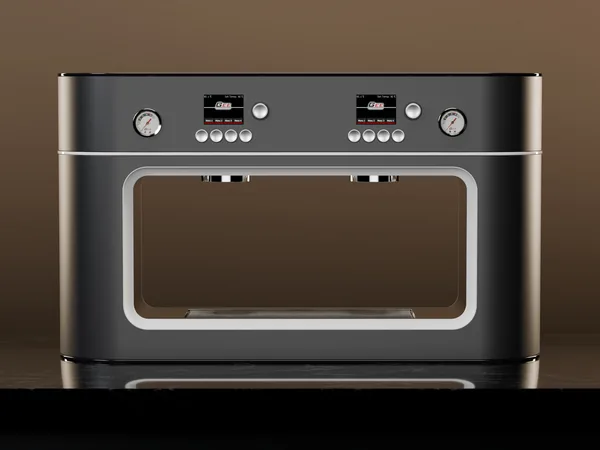
For a shop with a moderate daily output, a single group machine is usually enough. A speciality coffee shop with a high morning output, or a chain store, should consider a double group espresso machine, in particular a dual-system model with independent sides. One example is the GEE Pro Counter Top Twin (GCM2112). Each side has its own main boiler, pre-heating boiler and group head heater and runs fully independently. Both sides can extract at the same time without affecting each other, and temperature and pressure stay stable at peak hours too.
When you estimate output, use the busiest single hour, not the average over the whole day. A machine that is not powerful enough only shows it at the peak.
2. Temperature control and pressure: the core of flavour consistency in an espresso machine
The biggest difference between a commercial espresso machine and a home espresso machine is whether temperature and pressure hold up when cups are made back to back. The key specifications:
- PID temperature control: Holds the water temperature at the set value so that it does not swing up and down. A few degrees' difference in water temperature changes the balance of acidity and bitterness in an espresso. Espresso extraction is sensitive to water temperature, so PID control reduces the flavour difference between cups and is what makes a recipe repeatable.
- Pump: A standard part of every espresso machine. GEE machines use a 15 bar pump.
- Pressure profile and variable-pressure extraction: A more advanced requirement. The GEE Pro Counter Top System reproduces the pressure curve of a traditional lever machine. During extraction the pressure can be adjusted by hand through electronic control, and the actual extraction pressure is shown live. For speciality coffee shops that care about flavour control, this is the biggest difference from an ordinary fixed-pressure machine.
- Presets: GEE Pro Counter Top machines have 3 extraction modes and 4 menu presets (4 on each side of the Twin). The recipe is stored in the machine, so the drink comes out the same whoever is on shift. This matters most for chains. To keep the taste the same across branches, it is better to rely on machine settings than on an SOP.
3. Group head size and interchangeable accessories
For the group head, choose the professional 58mm size. It is the mainstream size for commercial espresso machines, so baskets, portafilters, tampers and other accessories and consumables are the easiest to buy and offer the widest choice, which makes later maintenance and upgrades convenient. All main units in the GEE commercial espresso range have a 58mm group head, with a 304 stainless steel boiler and an automatic backflush function, so there is a set routine to follow for daily cleaning and maintenance.
4. Commercial coffee machine size, counter space, water and electricity: confirm before you order
Many people choose a commercial coffee machine and only then find that it does not fit or that the power supply is not enough. Before ordering, be sure to confirm:
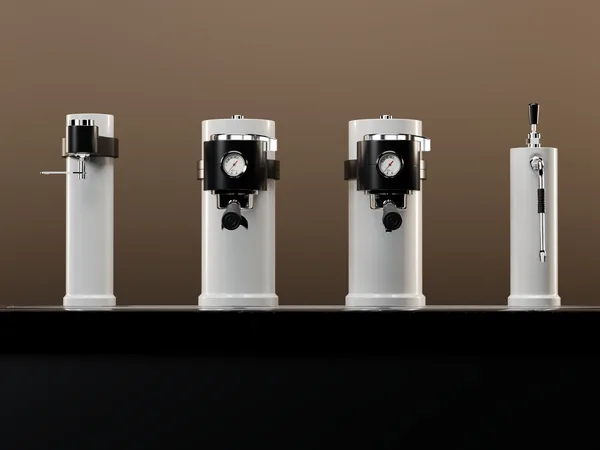
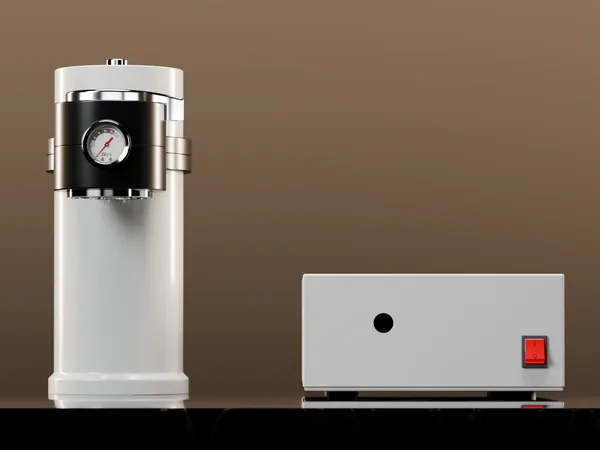
- Counter space and workflow: Measure the counter first, then compare it with the size of the machine. Besides the width and depth of the machine, leave room to work. If you want to keep the counter clear, consider a design installed below the counter. The GEE Pro Counter Top System puts the control box and boiler below the counter and leaves only the main unit (283 × 160 × 350 mm) on top, so the counter looks much tidier.
- Power supply: Most commercial espresso machines are AC 220–240V, so confirm that the site has a matching dedicated circuit with enough current capacity. Dual-system models draw more power (the Twin has a maximum power of 3240W and a current of 14.7 A), so ask an electrician to assess the supply first.
- Water inlet and water quality: The machine needs a water connection, so confirm the water inlet point and the water pressure first (the Twin, for example, uses a 1/4" quick-connect fitting and needs an inlet pressure of 2–2.5 bar). Fitting a water filter is recommended. The recommended water quality for the Twin is TDS below 120 ppm. Limescale is one of the most common causes of failure in commercial coffee machines.
5. Should one commercial coffee machine make both coffee and tea drinks?
In Taiwan the line between coffee shops and tea shops keeps blurring: cafés sell tea lattes and bubble tea shops sell americanos. If your menu has both, you can make "can it extract tea?" one of your requirements when choosing a machine.
This is what the GEE Pro Counter Top series is designed to do. On the same 58mm group head, fit the coffee portafilter for espresso, fit the Dripping Shower accessory for pour-over coffee, or fit the tea portafilter for pressure-extracted tea (Teapresso). One machine covers the coffee and tea menu without taking the space and budget of two machines. The main unit in the system comes in three versions: GCM-2109S (separate control box), GCM-2109T (control box with a pre-heating boiler, the main choice for tea) and GCM-2109C (integrated, set directly into the counter). Add the GCM-2107 hot water (pour-over) unit and the GCM-2108 steam unit as needed. All five units can be bought separately.
6. Comparing commercial espresso machine brands: after-sales service and where the machine is made
The espresso machine is production equipment: it is used every trading day. Every day it is down is a day of lost sales. When you compare brands, look beyond the name: before buying, confirm who does the repairs and how long parts take to arrive. GEE machines are made in Taiwan and parts and technical support come directly from the factory. GEE is RiConn Precision Technology’s own brand. The company was founded in 2007, develops and manufactures in Taiwan, and tests every unit before it leaves the factory. Brand customisation (laser-cut logo on the body, housing colour) and OEM / ODM development are also handled directly by the factory.
Types of commercial espresso machines and common terms on specification sheets
- Semi-automatic espresso machine: Ground coffee is dosed into a portafilter, the portafilter is locked into the group head and the machine extracts under pressure. Grinding and dosing are done by a person. Most espresso machines seen on coffee shop counters are of this type.
- Fully automatic (bean-to-cup) coffee machine: Grinding, tamping and extraction all happen inside the machine, and a cup is made at the press of one button. There is no portafilter.
- Single group / 2 group: The number of group heads. A single group machine runs one extraction at a time. A 2 group espresso machine can run two at the same time.
- Dual-system: Each side has its own boiler and settings. It is not just two group heads sharing one boiler. When both sides serve at the same time, they do not pull each other's temperature down.
- PID: A method of temperature control that keeps the water temperature stable at the set value.
- Pre-infusion: The step of wetting the bed of ground coffee before full-pressure extraction begins.
- Backflush: The procedure for cleaning the group head and its pipework, and a key part of daily care for a commercial espresso machine.
- TDS (total dissolved solids): The amount of dissolved minerals in the water. A high reading usually goes with harder water, in which limescale builds up more easily.
Three common mistakes when choosing a commercial espresso machine
Comparing price only. The price of a commercial espresso machine is only the first expense. After it come consumables, filter cartridges, repairs and the losses from downtime. A machine with no after-sales support behind it is not good value even if it is cheap.
Buying the machine before looking at the site. Not enough power, unstable water pressure, a counter the machine does not fit on: these are all found out only after the machine arrives. Measure the site first, then choose the machine. Done in that sequence, no money is wasted.
Choosing the machine for today's menu. Six months after opening, the menu has often changed. If you might add tea drinks, choosing a model that can extract tea from the start is less trouble than buying another machine later.
Questions to ask when you look at a commercial coffee machine
Whichever machine is on your list, these questions apply:
- If I make ten cups in a row, do temperature and pressure drop?
- How many recipes can be saved? Will the result differ when someone else operates the machine?
- What cleaning has to be done every day and every week? How long does it take?
- How often are consumables such as gaskets and baskets replaced? Where do I buy them?
- Who do I call when the machine breaks down? How long do parts take to arrive?
FAQ
How is a commercial espresso machine different from a home espresso machine?
The main difference is stability when serving cup after cup. The boiler, heating power and temperature control of a commercial coffee machine are designed for a full day of trading, and it uses a 58mm group head and commercial consumables.
Is a single group machine enough? When is a double group or dual-system espresso machine needed?
For a shop with a modest peak output, a single group machine is usually enough. Consider a double group espresso machine, in particular a dual-system model with independent left and right sides, when you need to make two cups at the same time at peak hours, or when a chain store needs stable capacity. Each side of a dual-system machine has its own boiler and settings, so the two sides do not pull each other's temperature down when both serve at the same time.
What are the types of commercial espresso machines? Semi-automatic or fully automatic?
On a semi-automatic espresso machine, ground coffee is dosed into a portafilter, the portafilter is locked into the group head and the machine extracts under pressure, while grinding and dosing are done by a person. A fully automatic (bean-to-cup) coffee machine grinds and extracts inside the machine and makes a cup at the press of one button. Single group, double group, group head and portafilter on a specification sheet belong to machines that extract with a portafilter. A fully automatic machine has no portafilter.
How much does a commercial espresso machine cost, and how should prices be compared?
The price of a commercial espresso machine depends on the model and the configuration, so there is no single figure. Do not compare the price of the machine alone. After it come consumables, filter cartridges, repairs and the losses from downtime. For a quotation on a GEE model, tell us your menu, expected number of cups and the configuration you want, and our sales team will provide one.
I want a coffee machine under my own brand. Can it be customised?
Yes. GEE offers a laser-cut logo on the body with backlighting and custom housing colours, and also takes on OEM / ODM development, handled by the factory in Taiwan from concept to mass production. GEE has ETL (UL 197 / CSA), NSF/ANSI 4 and CB certification experience on models it has developed and manufactured.
Is there a 110V espresso machine?
The home Espresso Coffee Machine comes in two versions, AC 100–120V and 220–240V. The commercial Pro Counter Top Twin is AC 220–240V only. If you need the GCM-2109S at 110V, write to our sales team to discuss it.
In short
Choosing a commercial espresso machine comes down to working in this order: settle output and menu first, confirm the core specifications such as temperature control and pressure, check counter space, water and electricity, decide whether coffee and tea drinks should come from one machine, and finally look at after-sales service and where the machine is made. Work through these 6 things before you turn to lists of the best espresso machine for coffee shops and compare brands and models, and the specification sheets will not confuse you.
Not sure which commercial espresso machine suits your coffee shop? Send us your menu, expected number of cups and photos of your counter, and the GEE team will suggest a suitable setup directly.
Related models
modular countertop espresso system (GCM-2109S / T / C plus the hot water unit and steam unit)
commercial espresso machine with independent left and right systems
main unit with a separate control box installed below the counter