Coffee shop equipment list
What you need to open a café, and what to buy first
Anyone planning to open a coffee shop soon gets stuck on equipment. Which commercial espresso machine? How many grinders? Do the hot water unit, the ice machine and the fridges all have to be there on day one? Every item has someone saying you must have it, and there is only one budget. Worse, buying in the wrong order hurts more than buying the wrong machine: secondary equipment arrives before the main unit is decided, and it takes budget and counter space with it.
This article follows a cup of coffee from start to finish and turns it into a coffee shop equipment list that works for a small coffee shop as well as a larger café. It also covers the buying order, a setup for a one-person shop, and the water, electricity and counter checks to make before you order.
Key points
- List coffee shop equipment in the order a cup is made (water, grinding, extraction, steam and hot water, serving) and nothing gets missed.
- The espresso machine is the core of the shop: settle output and menu first, then decide on one group or two and whether the same machine should also make tea.
- On a limited budget, buy first what you cannot open without, then what makes you faster and saves labour.
1. What equipment do you need to open a coffee shop? List it in the order a cup is made
Making a latte runs roughly like this: water, grinding, extraction, steam and hot water, serving. The coffee shop equipment that goes with each step:
- Water filtration: The source of every drink. Water quality shows directly in the taste of the coffee, and limescale is one of the most common causes of espresso machine failure. This is not the place to save money.
- Grinder: One for espresso. If you serve pour-over or single-origin coffee, a second one is usual. Grind consistency matters to flavour as much as the machine does.
- Espresso machine: The core of the shop. It decides how fast you serve and how consistent each cup is (more in the next section).
- Steam and hot water: Steam for milk, hot water for americanos, pour-over and tea. Some espresso machines have both built in; some shops use a separate steam unit and hot water unit.
- Refrigeration: For milk, syrups and desserts. Size it by the number of menu items and how often you restock.
- Ice machine: In a shop with many iced drinks, ice becomes the bottleneck in summer. Size it for your busiest day.
- Bar tools: Portafilters, tamper, distribution tool, milk jugs, scales, knock box and cleaning supplies.
A shop that sells food or desserts also needs an oven and a display case, sized by the menu.
2. Choosing the commercial espresso machine: the core of coffee shop equipment
On any coffee shop equipment list, the espresso machine is the most important decision and the largest single cost. It sets serving speed, consistency and what the counter looks like. Before choosing a commercial espresso machine, answer three questions:
- How many cups in the busiest hour? For a shop with a modest peak, a single group espresso machine is usually enough. If you often need to make two cups at the same time at peak hours, look at a 2 group espresso machine.
- Who will operate it? A portafilter (semi-automatic) machine gives more freedom over flavour, but it needs someone who knows how to grind and dose. With a machine that stores recipes, the taste is less likely to change when the person on shift changes.
- Is there tea on the menu? If so, make "can it extract tea?" a requirement and save the budget and space of a second machine.
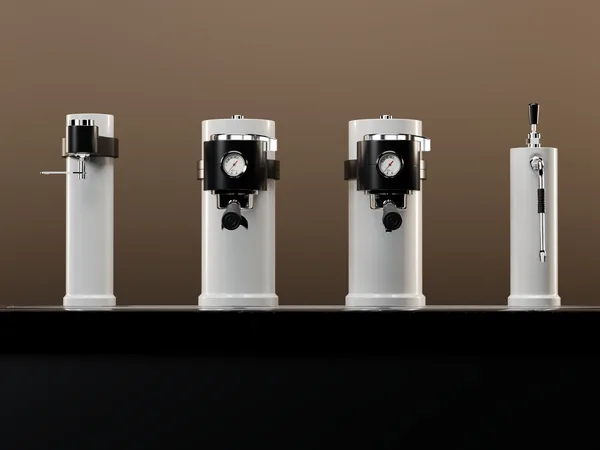
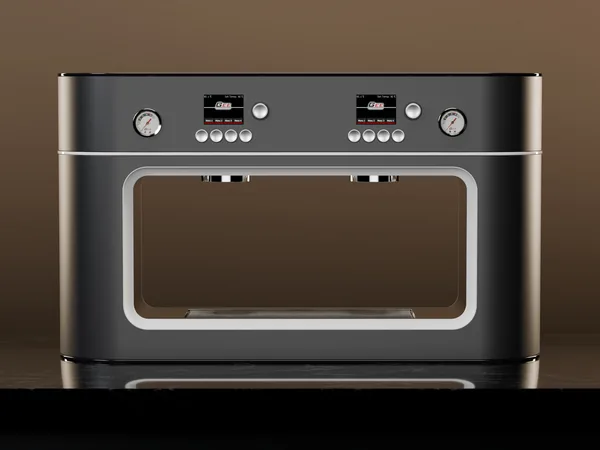
Taking GEE models as examples: the GCM-2109S is a single group main unit whose control box installs below the counter, leaving only the 283 × 160 × 350 mm main unit on top. The Pro Counter Top Twin is a dual-system machine: each side has its own boilers and settings, and both sides can extract at the same time. Both models have PID temperature control and menu presets, and both brew espresso, pour-over coffee and pressure-extracted tea (Teapresso) on the same group head.
3. Grinder, water filtration and refrigeration: the three most underrated pieces of coffee shop equipment
Beyond the espresso machine, these three are often treated as supporting items, and they are the ones that most often cause trouble after opening:
- Grinder: Much of the taste of espresso comes from the grind. A new coffee or a change in the weather means adjusting the setting, so choose a grinder that is easy to adjust and doses steadily. If the menu has both espresso and pour-over, use one grinder for each instead of moving one back and forth.
- Water filtration: The grade and flow rate of the filter have to match the water used by the espresso machine and the ice machine. For the GEE Pro Counter Top Twin, for example, the recommended inlet water quality is TDS below 120 ppm. Filter cartridges have to be changed on schedule, and that cost belongs in the monthly budget.
- Refrigeration: Milk within arm's reach saves seconds on every cup at peak hours. Plan the workflow behind the counter first, then decide the size and position of the fridge.
4. Pour-over, tea and hot water: equipment that depends on the menu
Few coffee shop menus stop at espresso drinks. Whether you need the following depends on yours:
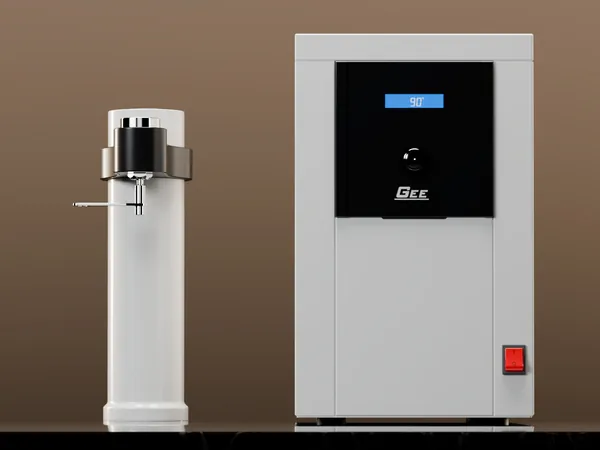
- Pour-over coffee: Needs a hot water source, drippers and a kettle. A hot water unit that dispenses water at a set temperature and volume keeps both constant; one example is the GEE GCM-2107, whose boiler installs below the counter. To make the pour itself more consistent, use the GEE Dripping Shower, or fit the Dripping Shower accessory to the espresso machine to brew pour-over coffee.
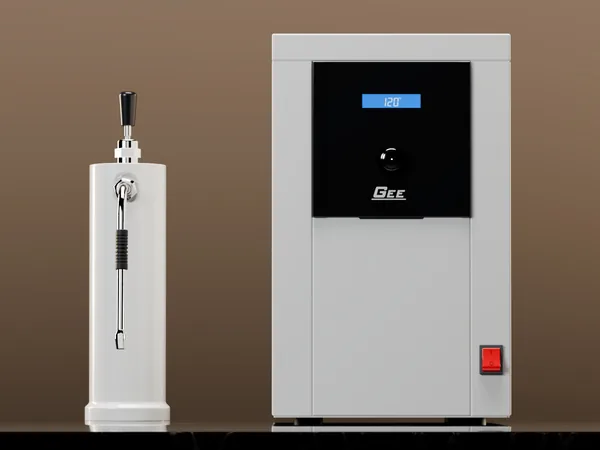
- Milk foam: A shop that sells many lattes and cappuccinos needs strong, steady steam. The GEE GCM-2108 steam unit stands on its own: its steam boiler (2000W, 8000cc) installs below the counter and only a slim column carrying the steam wand stands on top.
- Tea drinks: Tea lattes and milk tea are increasingly common in coffee shops. A Teapresso machine and an espresso machine are built the same way, and on the GEE Pro Counter Top series you fit a tea portafilter to make tea on the same machine, with no second machine for a few tea items.
5. Opening a coffee shop on a limited budget: what coffee shop equipment to buy first
The rule: buy what you cannot open without first, then what makes you faster and saves labour.
First round (needed to open): water filtration, grinder, espresso machine (with steam), refrigeration, and bar tools such as portafilters, tamper, milk jugs and scales. If any one of these is missing, no cup goes out.
Second round (speed and consistency): ice machine, hot water unit, distribution tool, second grinder. While volume is low you can manage by hand and with what you have, then add these as volume grows.
Third round (for a wider menu): pour-over bar equipment, oven, display case. Buy these once the menu is confirmed.
People often ask how much of the cost of opening a coffee shop should go to equipment. There is no general figure: it depends on the menu, the size of the shop and the list you end up with. Get a price for each item and add them up, then add the electrical and plumbing work and spare parts. GEE coffee machines are quoted by model and configuration; contact us for a quotation.
6. Coffee shop equipment list at a glance
The table below puts the equipment a coffee shop commonly uses in one place, so you can check it off before opening.
| Equipment | What it does | Buying round |
|---|---|---|
| Water filtration | Filters the inlet water, protecting the machines and the taste of the coffee | First |
| Grinder (espresso) | Grinds beans finely for espresso | First |
| Commercial espresso machine | Extracts espresso | First |
| Steam (built into the machine or a separate steam unit) | Steams and froths milk | First |
| Refrigeration | Stores milk, syrups and desserts | First |
| Portafilters, tamper, milk jugs, scales, knock box | Dosing, steaming and weighing | First |
| Ice machine | Supplies ice | Second |
| Hot water unit (set temperature and volume) | Hot water for americanos, pour-over and tea | Second |
| Distribution tool | Breaks up and evens out the ground coffee before tamping | Second |
| Grinder (pour-over) | Grinds for pour-over coffee | Second |
| Pour-over tools, drip shower | Pour-over coffee | By menu |
| Oven, display case | Food and desserts | Third |
7. Water, electricity and counter checks before ordering coffee shop equipment
Once the coffee shop equipment list is written, do not order yet. Go back and check the site:
- Electricity: Most commercial espresso machines run on 220–240V AC. Add up the power rating of every piece of equipment and ask an electrician to assess the circuits (for example, the GEE GCM-2109 main unit has a maximum power of 1370W; the Pro Counter Top Twin has a maximum power of 3240W at 14.7 A and needs its own circuit).
- Water supply and drainage: The espresso machine and the ice machine both need a water inlet and a drain, and inlet pressure has to be steady (2–2.5 bar is recommended for the GEE Twin).
- Counter size: Add working room to the footprint of each machine and draw the workflow before you order. Models with the control box and boiler below the counter leave the top for working and for the customer's view.
8. Equipment for a small coffee shop run by one person
In a one-person coffee shop there is one pair of hands behind the counter, so equipment should save steps and be easy to clean:
- A single group espresso machine is usually enough. When one person runs the shop, the bottleneck is usually that one pair of hands, not the number of group heads. Instead of a larger machine, put the budget into consistency: PID temperature control and stored recipes, so you are not adjusting by feel on every cup when it gets busy.
- Keep the counter clear. In a small shop the counter is also where you serve, take payment and talk to customers. A small main unit with the boiler below the counter keeps it from filling up.
- Do not let the menu outgrow the equipment. Every category you add, whether pour-over, tea or desserts, brings another set of equipment and cleaning. Start with one machine that covers several drinks, for example espresso, pour-over coffee and tea on the same group head, and add equipment once business is steady.
9. Three common mistakes when opening a coffee shop
Buying all the coffee shop equipment at once. Every machine you could think of is bought before opening, and some items never sell. Buy what is needed to open, and decide the rest once you have sales figures.
Buying the machine before looking at the site. Not enough power, unstable water pressure, a counter the machine does not fit on: these are found out only when the machine arrives. Measure the site first, then choose the machine.
Forgetting spare parts and consumables. Filter cartridges, group head gaskets and cleaning supplies belong in the budget, and you need to know where to get them and how long they take to arrive.
FAQ
What equipment do you need to open a coffee shop, and what can wait?
List it in the order a cup is made: water filtration, grinder, espresso machine, steam and hot water, refrigeration, ice machine, and bar tools such as portafilters, tamper, milk jugs and scales. Water filtration, the grinder, the espresso machine, refrigeration and bar tools are needed to open. The ice machine, hot water unit and second grinder can wait until volume grows, and the pour-over bar, oven and display case until the menu is confirmed.
How much of the cost of opening a coffee shop goes to equipment?
It varies widely with the positioning of the shop and the grade of the equipment, so there is no single figure. List the essential coffee shop equipment in the order of the workflow, ask for prices item by item and add them up, then add the electrical and plumbing work and spare parts. GEE coffee machines are quoted by model and configuration, and you are welcome to write to us.
For a small coffee shop run by one person, a single group or a 2 group espresso machine?
In most cases a single group espresso machine is enough: when one person runs the shop, what holds up a cup is usually the work in hand, not the number of group heads. Choose a machine with stable temperature control and saved recipes over a larger one. Consider a 2 group espresso machine if you often need two extractions running at the same time at peak hours.
Our coffee shop also wants to sell tea. Do we need another machine?
Not necessarily. A pressure tea machine and an espresso machine are built the same way. On the GEE Pro Counter Top series you make espresso, pour-over coffee and Teapresso on the same machine by changing what is fitted to the group head.
What is most often missed before ordering coffee shop equipment?
Water and electricity. The 220–240V circuit, current capacity, water inlet point and water pressure are the items most often overlooked. The shortfall is found only when the machine arrives and cannot be installed, and the schedule slips.
Is a used commercial espresso machine a good idea?
It can be, after three checks: whether parts are still available, whether someone can service it, and whether its voltage and specifications match the site. An espresso machine is used every trading day, so after-sales support matters more than the price.
In short
More equipment does not make a better coffee shop. List it by the workflow, order it by necessity and check it against the site. Once the espresso machine, the core decision, is settled, grinding, steam, hot water and refrigeration fall into place around it.
GEE is the brand of RiConn Precision Technology, which develops and manufactures coffee machines and Teapresso machines in Taiwan. If you are planning to open a coffee shop, tell us your menu, expected output and counter size, and we can help you plan the espresso machine, steam and hot water setup.
Related models
modular countertop espresso system (main unit, steam unit and hot water unit)
commercial espresso machine with independent left and right systems
separate steam unit with the steam boiler below the counter
dispenses hot water at a set temperature and volume